
Hip Impingement: Understanding Your Hip Pain
Written By: Janine Didyk BMR.PT, MSc
Do you have pain deep in your hip or groin that just won’t go away? Maybe you’ve noticed clicking, catching, stiffness, reduced range of motion, or discomfort during activities like squatting, running, or sitting for long periods. If so, you may have been told you have hip impingement, also known as Femoroacetabular Impingement Syndrome (FAIS).
The good news? A diagnosis of hip impingement does not automatically mean surgery. Physiotherapy can play a key role in helping you understand your symptoms, improve your function, and get back to the activities you enjoy.
What Is Hip Impingement?
Femoroacetabular Impingement Syndrome (FAIS) is a condition that falls under the umbrella of non-arthritic hip disorders. It is commonly diagnosed in younger and active individuals and is based on a combination of:
• Your symptoms
• Clinical examination findings
• Imaging results (such as X-rays or MRI)
People with FAIS often experience:
• Deep hip or groin pain
• Pain with bending or squatting
• Clicking, locking, or catching sensations
• Stiffness
• Reduced hip mobility
• A feeling that the hip may give way
During a physiotherapy assessment, we commonly find discomfort with movements involving deep hip flexion (bringing your knee toward your chest) and combined bending and rotation movements. Some individuals may also demonstrate reduced strength in the muscles that support the hip.
How Does Hip Impingement Develop?
The exact reason why some people develop symptoms from FAIS is not fully understood.
Several factors may contribute, including:
• The shape of the hip joint you were born with
• Growth and development during childhood and adolescence
• Previous injuries
• Participation in sports and physical activities during your growing years
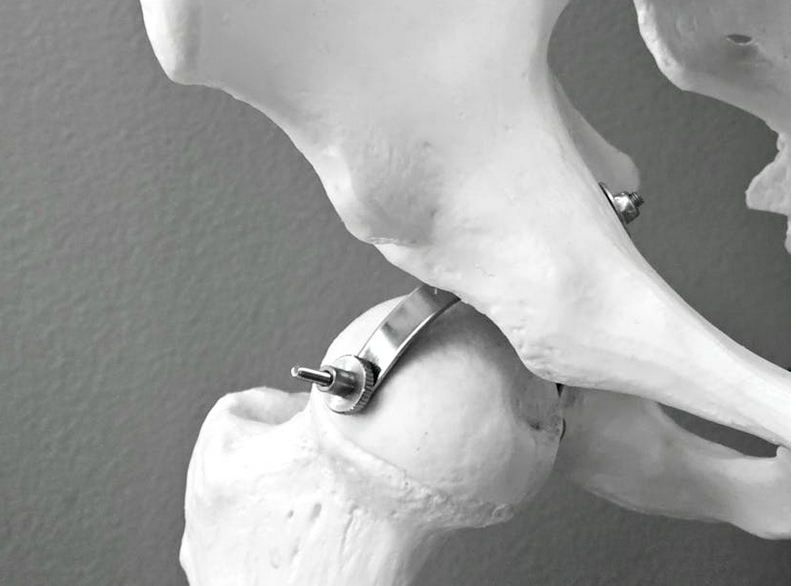
The hip is a ball-and-socket joint. Certain bony shapes can develop around the ball or socket, often described as:
• Cam morphology
• Pincer morphology
• Combined morphology
These structural differences can be identified on X-rays.
Another structure frequently discussed in FAIS is the labrum, a ring of cartilage that helps create a seal around the hip joint and contributes to stability. MRI scans often show labral changes or tears in people diagnosed with FAIS.
However, here’s something important to know:
Many people who have never experienced hip pain also have cam or pincer morphology and labral tears visible on imaging.
This is one reason why healthcare providers do not always rush to order imaging studies before trying conservative treatment.
If There Is a Bone Shape Difference or Labral Tear, How Can Physiotherapy Help?
This is one of the most common questions we hear.
While bone shape and labral changes may contribute to symptoms, pain is often much more complex than anatomy alone.
Key factors can influence how your hip feels and functions, such as:
• Strength
• Mobility
• Movement patterns
• Activity levels
• Load management
• Nervous system sensitivity
A physiotherapist experienced in managing hip pain can assess your unique situation and help determine which factors are most relevant to your symptoms.
Why Early Treatment Matters
Research has shown that many individuals with FAIS spend months or even years seeking answers before receiving a diagnosis.
This journey can be frustrating and may lead to:
• Reduced activity levels
• Loss of confidence in movement
• Deconditioning
• Ongoing pain and limitations
Fortunately, many people experience meaningful improvements through a combination of education, activity modification, strengthening, and progressive rehabilitation.
In fact, current best practice supports attempting a comprehensive rehabilitation program before considering surgical intervention.
Key Principles of Rehabilitation for Hip Impingement
1. Create a “Quiet” Hip
When your hip is irritated, we may recommend temporary activity modifications to reduce symptom aggravation.
The goal is not to avoid movement forever.
The goal is to calm the hip enough that you can gradually return to the activities that matter to you.
A hip that only feels good because you’ve stopped doing everything you enjoy is not truly recovered.
Our job is to help you reduce symptoms while building a path back to full participation.
2. Find Your Entry Point to Movement
When people experience pain, they often fall into one of two categories:
The Avoider
• “It hurts, so I’ll stop.”
The Confronter
• “It hurts, but I’ll push through it.”
Both responses are understandable.
However, neither extreme is usually the most effective long-term strategy.
Successful rehabilitation often involves finding an appropriate starting point where movement is possible without creating excessive irritation.
From there, we gradually build confidence, capacity, and function.
3. Build Strength and Capacity
One of the most important parts of rehabilitation is progressive strengthening.
There are often many movements and exercises your body can tolerate even when your hip is painful.
Strengthening the muscles around the hip, pelvis, trunk, and lower body can improve your overall function and help support your return to activity.
Will getting stronger guarantee a pain-free hip?
Not necessarily.
But improving strength, resilience, and movement capacity gives your body the best opportunity to succeed.
As I often tell my patients: No one ever complained about being too strong.
How Physiotherapy Can Help
Every person with hip pain is different.
At Better Beyond Rehab, we take the time to understand:
• Your symptoms
• Your goals
• Your activity demands
• Your movement patterns
• Your strengths and limitations
We then create an individualized treatment plan designed to help you move better, build confidence, and return to the activities that matter most to you.
Whether you’re an athlete, recreational exerciser, or simply trying to stay active without pain, we’re here to help guide you through the process.
Ready to Take the Next Step?
If hip pain is limiting your ability to work, exercise, play sports, or enjoy everyday activities, physiotherapy may be an important part of your recovery.
Book an assessment with one of our physiotherapists and let us help you understand your hip pain, quiet your symptoms, and build a path back to doing what you love.
Written By: Janine Didyk BMR.PT, MSc
Better Beyond Rehab
Care for the whole family.
