
How Long Does An Ankle Sprain Take To Heal?
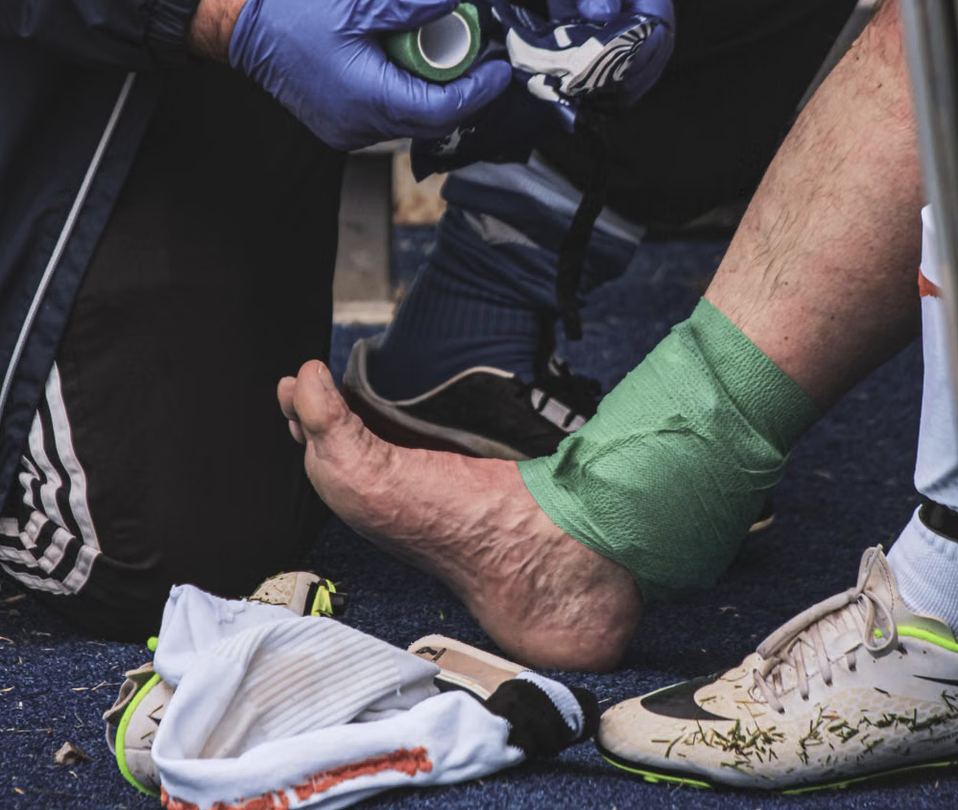
Did you roll your ankle stepping off a curb, landing a rebound, or on the first icy sidewalk of the season? Maybe it swelled up fast, turned purple, and now you're wondering whether you can play this weekend, or whether you should have it looked at at all.
Ankle sprains are one of the most common injuries we see at Better Beyond Rehab, in kids, weekend athletes, and people who just stepped wrong. They're so common that many people shrug them off. That's exactly why so many ankles get sprained again.
The honest answer to "how long will it take?" is: it depends on how badly the ligaments were injured, and on what you do during recovery. Here's what to expect.
Healing Time Depends on the Grade of Sprain
Most ankle sprains happen when the foot rolls inward, stretching or tearing the ligaments on the outside of the ankle. Clinicians grade the injury by how much of the ligament is damaged:
Grade 1 (mild)
What’s happening? The ligament is stretched, with small microscopic tears. Mild swelling; you can usually walk.
Typical Recover: 1 to 3 weeks
Grade 2 (moderate)
What’s happening? Partial tear. More swelling and bruising, the ankle may feel loose, and walking is painful.
Typical Recover: 3 to 6 weeks
Grade 3 (severe)
What’s happening? Complete tear. Significant swelling, bruising, and instability; weight bearing is very difficult.
Typical Recover: 3 to 6 months
What about a "high ankle sprain"? This injures the ligaments that hold the two lower leg bones together, just above the ankle joint. It's common in hockey, football, and skiing, and it usually takes noticeably longer to recover than a typical sprain of the same severity.
These timelines describe when most people are back to daily activity. Getting back to cutting, jumping, and full-speed sport usually takes longer.
"It Doesn't Hurt Anymore" Isn't the Same as Healed
Pain and swelling often settle well before the ligament has finished repairing. Ligament tissue keeps remodelling and gaining strength for months after the injury, even once walking feels normal.
The bigger issue is what the sprain leaves behind if it isn't rehabbed:
Weaker muscles around the ankle and hip
Stiffness, especially in bending the ankle upward
Lost balance and proprioception, your ankle's sense of where it is in space
That combination is why a previous sprain is the single biggest risk factor for spraining the same ankle again. A substantial share of people go on to develop chronic ankle instability: an ankle that keeps giving way, feels unreliable on uneven ground, and sprains with less and less force.
The good news: structured balance and strengthening exercise is one of the best-supported ways to reduce the risk of re-injury.
The Stages of Ankle Sprain Recovery
You may have grown up with RICE (rest, ice, compression, elevation). Current evidence has moved away from strict rest. Ligaments heal better with early, gradual loading. Here's how recovery typically progresses:
Protect (first 1 to 3 days). Limit activities that spike pain, use compression and elevation to manage swelling, and walk as comfortably as you can. A brace or crutches may help with more severe sprains.
Restore motion and walking (roughly weeks 1 to 3). Gentle ankle range-of-motion exercises, getting back to a normal walking pattern, and gradually increasing daily activity as swelling settles.
Rebuild strength and balance (roughly weeks 2 to 6). Calf raises, resisted ankle work, single-leg balance, and hip strengthening. This is the stage most people skip, and the one that matters most for preventing the next sprain.
Return to sport (week 4 onward, depending on grade). Running, hopping, cutting, and sport-specific drills, progressed step by step.
The timeline is a guide, not a rule. At BBR, we progress you based on how your ankle functions, not just how many weeks have passed.
Are You Ready to Return to Sport? A Functional Checklist
Before going back to hockey, basketball, soccer, or running, you should be able to:
Walk and jog with no limp and no pain
Balance on the injured leg for 30 seconds, eyes open, as well as on the other side
Do repeated single-leg calf raises close to the number on your uninjured side
Hop forward and side to side on the injured leg without pain or apprehension
Change direction and cut at speed with confidence
Complete a full practice without swelling the next day
If any of these are a struggle, your ankle likely isn't ready yet, even if it feels fine day to day.
Is It a Sprain or a Fracture?
Not every rolled ankle is "just a sprain." Get it assessed and possibly X-rayed if:
You couldn't take four steps right after the injury, or still can't
There's tenderness directly on the bony bump on either side of the ankle
There's tenderness on the outside edge of the midfoot or the top of the foot
The foot looks deformed, feels numb, or turns cold or pale
A note for parents: In children, the growth plates are often weaker than the ligaments around them. An injury that looks like a sprain can sometimes be a growth-plate injury instead, so a child who is limping or won't bear weight should be assessed. Our BBR for Kids team uses play-based rehab to get young athletes back safely. Read more here.
When to See a Physiotherapist
Book an assessment if:
You're still limping after a few days
Swelling or pain isn't steadily improving after 1 to 2 weeks
Your ankle feels loose or keeps giving way
You've sprained the same ankle before
You have a game, season, or event you're trying to get back for
No referral is needed to see a physiotherapist in Manitoba, and most extended health plans cover physiotherapy.
Rolled your ankle? Our Winnipeg team will assess the injury, rule out anything more serious, and build a plan to get you back to what you love, with a stronger ankle than before. Book an appointment with Better Beyond Rehab today.
