
Scoliosis: Signs Every Parent Should Know
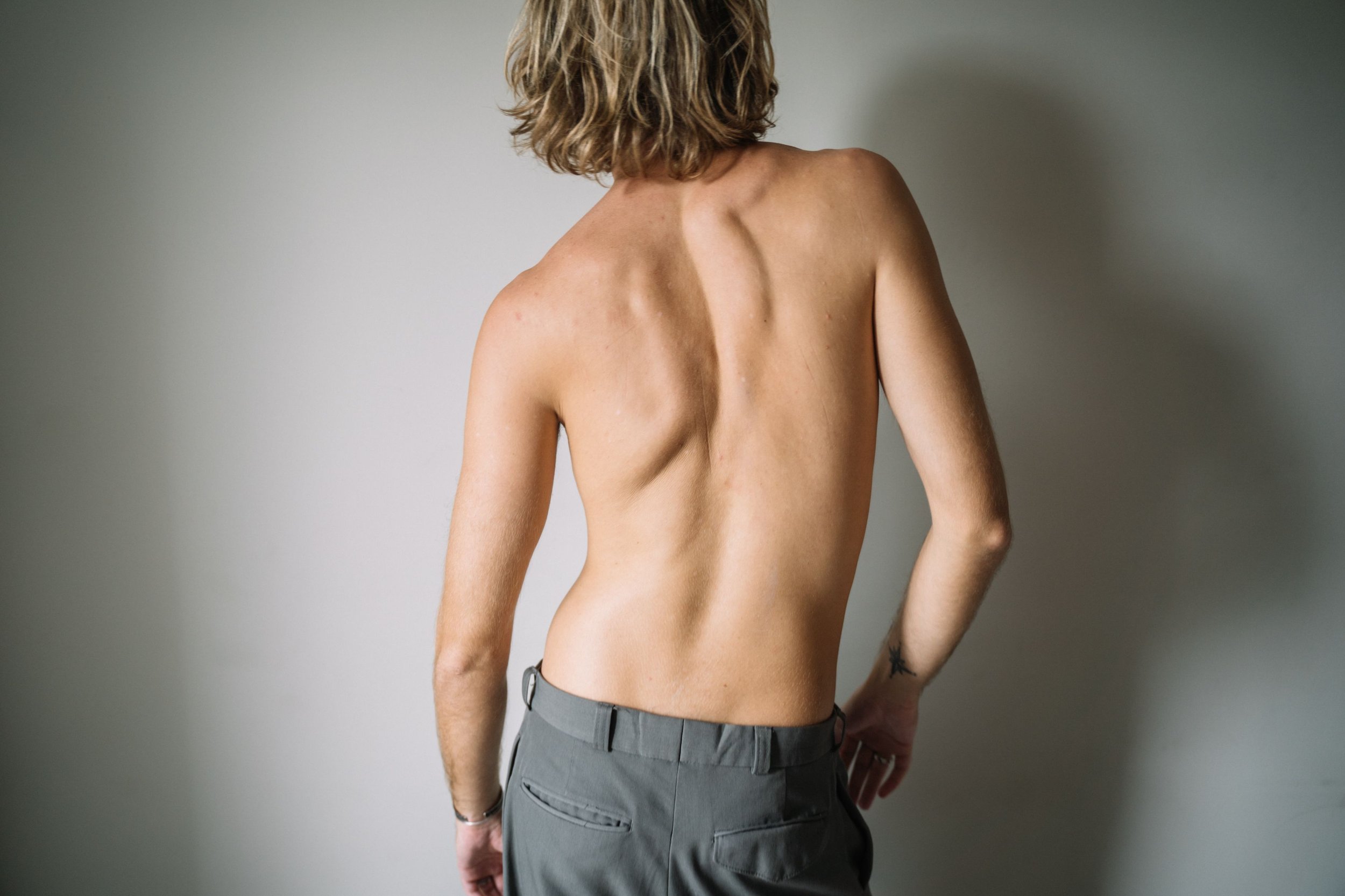
Many parents first notice it by accident. A swimsuit that sits a little crooked, a dress hem that never hangs straight, or one shoulder that looks higher than the other in a school photo. Because scoliosis is usually painless, it is often seen before it is ever felt.
The good news is that most scoliosis in children is mild, and many kids never need more than regular check-ins. However, catching it early matters. Scoliosis tends to change most during growth spurts, and the treatments that slow it down work best while your child is still growing. Knowing what to look for can help you act at the right time.
If your child is also complaining of back pain, our article Why Does My Child's Back Hurt? covers the most common causes and the warning signs to watch for.
What Is Scoliosis?
Scoliosis is a sideways curve of the spine. It is not just a bend to one side; the spine also twists slightly as it curves, which is why one side of the ribcage or lower back can look more prominent than the other.
Scoliosis is measured on an X-ray in degrees, called the Cobb angle. A curve of 10 degrees or more is considered scoliosis. Small curves are common, and many of them stay small for life.
Types of Scoliosis in Children
1. Adolescent Idiopathic Scoliosis
This is by far the most common type. It appears between about age 10 and the end of growth. "Idiopathic" simply means there is no single known cause, although it does tend to run in families.
Mild curves are seen in boys and girls about equally, but girls are much more likely to have curves that get bigger and need treatment.
2. Early-Onset Scoliosis
Scoliosis that appears before age 10 is less common. Because these children have a lot of growing left to do, their curves are watched more closely and are usually assessed by a pediatric orthopaedic spine surgeon.
3. Congenital Scoliosis
This type comes from vertebrae that formed differently before birth. It is often found on an X-ray taken for another reason, or picked up in infancy.
4. Neuromuscular Scoliosis
Children with conditions such as cerebral palsy, muscular dystrophy, or spina bifida can develop scoliosis because the muscles supporting the spine are affected. These curves are managed alongside the child's broader care team.
5. Functional (Non-Structural) Scoliosis
Sometimes the spine looks curved, but the spine itself is normal. A leg length difference or muscle spasm from pain can cause the body to lean to one side. This type improves when the underlying cause is addressed.
What Does NOT Cause Scoliosis
Parents often worry they missed something or caused it. You didn't. Scoliosis is not caused by:
Heavy backpacks
Slouching or poor posture
Sleeping position
Carrying a younger sibling on one hip
One-sided sports like hockey, tennis, or golf
Like many childhood posture worries, the reality is far more reassuring than the myths. Our article Is W-Sitting Bad? The Real Truth About Intoeing and Development tackles another common one.
Signs of Scoliosis Every Parent Should Know
The easiest way to check is with your child standing relaxed, feet together, with their shirt off or in a swimsuit or fitted top. Stand behind them and look for:
One shoulder sitting higher than the other
One shoulder blade sticking out more than the other
An uneven waist, with a deeper crease on one side
One arm hanging farther away from the body than the other
One hip looking higher or more prominent
The head or body not centred over the pelvis, or leaning to one side
Clothes, hems, or straps that always hang unevenly
Ribs that look more prominent on one side, from the front or back
The At-Home Forward Bend Check
The most useful sign is a "rib hump" when your child bends forward. Doctors and physiotherapists call this the Adams forward bend test, and you can do a simple version at home:
Have your child stand with feet together and knees straight.
Ask them to put their palms together and slowly bend forward, letting their arms hang toward the floor.
Crouch behind them so your eyes are level with their back.
Look along the spine from the upper back down to the lower back.
If one side of the upper back or lower back sits higher than the other, it is worth booking an assessment. This check does not diagnose scoliosis, but it is a good reason to have a closer look.
Many schools no longer screen for scoliosis, so parents are often the first to notice. The best times to check are during growth spurts, usually ages 10 to 14 for girls and 12 to 16 for boys. If a parent or sibling has scoliosis, check a little more often.
Is Scoliosis Painful?
The most common type, adolescent idiopathic scoliosis, is usually not painful. Some kids notice mild aching after long days of sitting or activity, which is normal.
Significant pain is not typical, and it is a sign that something else may be going on. Scoliosis with significant back pain should always be assessed.
Book a medical assessment soon if your child has:
A curve that appears before age 10
Back pain that is constant, severe, or wakes them at night
A curve that seems to be changing quickly
A stiff or rigid back
Seek medical attention right away if your child has:
New numbness, tingling, or weakness in the legs
Changes in bladder or bowel control
Difficulty walking or a new limp
If a change in walking is what caught your eye, our guide Why Is My Child Limping? When Should You Be Concerned? can help you sort through the possible causes.
How Is Scoliosis Diagnosed?
An assessment starts with a physical exam. Your child's physiotherapist or doctor will look at their posture, repeat the forward bend test. They will also check leg lengths, flexibility, and nerve function.
If scoliosis is suspected, a standing X-ray confirms the diagnosis and measures the Cobb angle. The X-ray also helps estimate how much growing your child has left, which is one of the most important factors in predicting whether a curve will get bigger.
How Is Scoliosis Treated?
Treatment depends on the size of the curve and how much growth remains.
Observation: Smaller curves, usually under about 25 degrees, are monitored with regular check-ups and X-rays while your child grows.
Bracing: For growing children with moderate curves, usually around 25 to 40 degrees, a brace may be recommended. The goal of a brace is to stop the curve from getting bigger, not to straighten it. Research shows bracing reduces the need for surgery when it is worn as prescribed, which is often many hours a day.
Surgery: Larger curves, typically over 45 to 50 degrees, may need surgery called a spinal fusion. This is managed by a pediatric orthopaedic spine surgeon.
The reassuring part is that curves that are small when growth finishes rarely cause problems later in life.
How Can Physiotherapy Help?
Physiotherapy cannot make a structural curve disappear, but it plays a valuable role at every stage of scoliosis care. A physiotherapist can:
Screen for scoliosis and help coordinate next steps with your family doctor
Teach scoliosis-specific exercises to improve trunk control and posture alongside monitoring or bracing
Build core, back, and hip strength to support the spine
Manage aches and stiffness so your child stays comfortable
Help kids stay active and confident while wearing a brace
Guide recovery and return to activity after spinal surgery
One of the most important messages for families is that kids with scoliosis can and should stay active. Sport and exercise are encouraged, not something to avoid.
That's A Lot Of Info… So When Should You Seek Medical Attention?
Arrange an assessment if your child:
Has uneven shoulders, shoulder blades, waist, or hips
Has a rib hump or lower back bulge on the forward bend check
Has clothes that consistently hang unevenly
Has a parent or sibling with scoliosis and is entering a growth spurt
Has back pain along with a visible curve
Has any of the warning signs listed above
In Manitoba, you do not need a referral to see a physiotherapist. A physiotherapy assessment is a great first step, and we will work with your family doctor or our pediatric orthopedic surgeon to acquire an X-Ray if needed.
Frequently Asked Questions About Scoliosis in Children
Can scoliosis go away on its own?
Structural scoliosis does not usually go away, but many small curves stay small and never need treatment. Functional scoliosis often improves once the underlying cause is addressed.
Will my child's scoliosis get worse?
Curves are most likely to progress during growth spurts. Regular monitoring during these years is the best way to catch changes early.
Can my child play sports with scoliosis?
Yes. Most children with scoliosis can take part in all their usual sports and activities, and staying active is good for their back.
Did a heavy backpack or bad posture cause my child's scoliosis?
No. Backpacks, posture, and sleeping position do not cause scoliosis.
At what age should I check my child for scoliosis?
Start checking around age 10, and check every few months during growth spurts, especially if scoliosis runs in your family.
The Bottom Line
Scoliosis is common, usually painless, and in most children it stays mild. Because it rarely hurts, it is often parents who notice it first, through uneven shoulders, a rib hump when bending forward, or clothes that hang crooked. Checking your child during growth spurts and getting an early assessment when something looks off gives your child the most treatment options and the best chance of keeping a curve small. Most importantly, kids with scoliosis can keep doing the activities they love.
Our BBR for Kids team works with children and teens in Winnipeg every day. If you have noticed any of these signs, contact us to book an assessment.
Related Articles
