
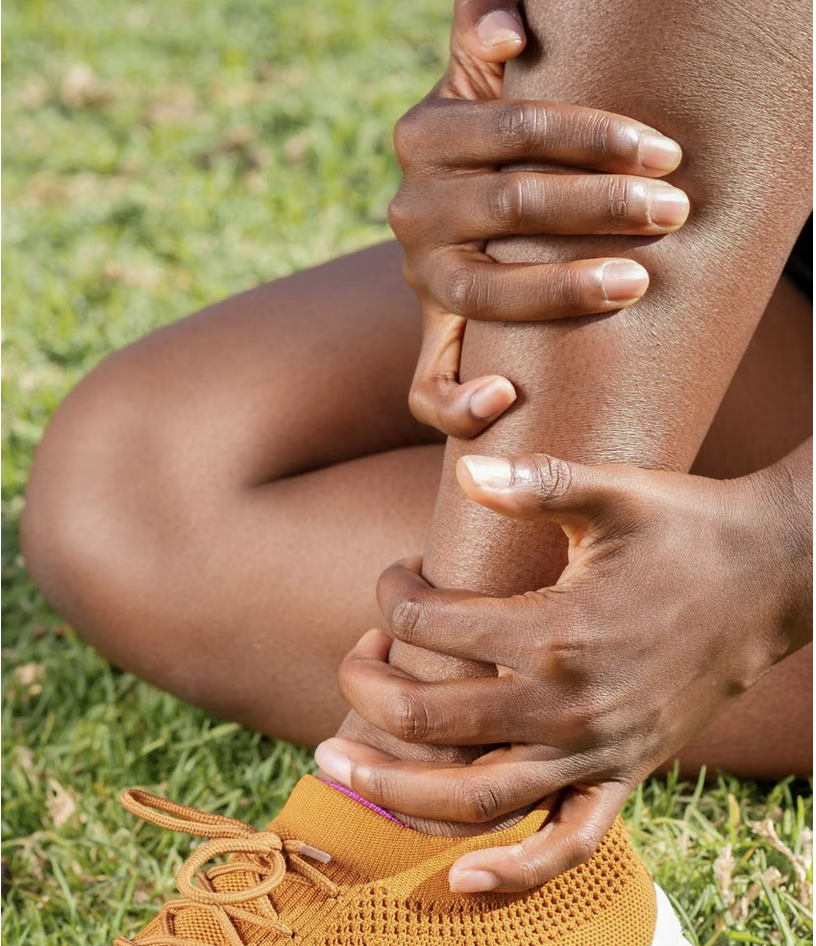
Your child comes home from cross-country, basketball tryouts, or the first week of soccer and says their shins hurt. Is it just sore muscles, or something you need to get checked?
Shin splints are one of the most common overuse injuries we see in young athletes, especially at the start of a new season. The good news is that most cases settle well with the right changes to training and a structured plan. However, shin pain can sometimes be an early warning sign of a stress fracture, and knowing the difference helps you decide what to do next.
If your child is also limping, you may find our article "Why Is My Child Limping? When Should You Be Concerned?" helpful.
What Are Shin Splints?
"Shin splints" is the everyday name for a condition called medial tibial stress syndrome (MTSS). It causes pain along the inner edge of the shin bone (the tibia), usually in the lower half of the leg.
The pain comes from the bone and the tissue that attaches to it being overloaded by repeated impact. Every stride or jump bends the shin bone slightly. Bone adapts to this by getting stronger, but it needs time. When running or jumping increases faster than the bone can adapt, it becomes irritated and sore.
It helps to think of shin splints as being on a spectrum. At one end is mild, short-lived soreness. At the other end is a stress fracture, a small crack in the bone. Catching shin splints early is the best way to stop them progressing.
Why Do Young Athletes Get Shin Splints?
Shin splints are most common in sports with lots of running and jumping, such as:
Cross-country and track
Soccer
Basketball and volleyball
Dance, cheer, and gymnastics
Football and rugby during preseason conditioning
1. Doing Too Much, Too Soon
This is the biggest cause by far. We see a spike in shin pain every September and every time indoor court season starts. A child goes from a quiet summer to practices five days a week, or joins two teams at once. The bone simply has not had time to catch up.
2. Hard Surfaces and Worn-Out Shoes
Gym floors, pavement, and artificial turf all increase impact. In Winnipeg, many young athletes move their training indoors for the winter, often onto harder surfaces. Shoes that are worn out or poorly suited to the sport can add to the load.
3. Growth Spurts
During rapid growth, bones lengthen faster than muscles can keep up. Calves become tight, coordination can temporarily drop, and the shin takes more stress with each step. This is the same growth-related process behind Sever's Disease at the heel and Osgood-Schlatter Disease at the knee.
4. Weak Calves and Hips
The calf muscles act as shock absorbers for the shin. When they are weak or tire quickly, more force goes straight into the bone. Weak hip muscles can also change how the leg lands, adding stress lower down.
5. Not Enough Fuel
Growing athletes need enough energy for both growth and training. When a busy teen is not eating enough to match their activity, bone health suffers. This raises the risk of shin splints progressing to a stress fracture. It is especially important to watch for in runners and dancers, and in girls whose periods have become irregular or stopped.
6. A Previous Episode
Kids who have had shin splints before are more likely to get them again, especially if they returned to full training too quickly the first time.
Signs and Symptoms of Shin Splints
Typical shin splints feel like:
A dull ache along the inner edge of the shin, usually the lower half
Pain spread over a strip of bone several centimetres long, rather than one sharp spot
Soreness at the start of activity that may ease once warmed up, then return afterward
Tenderness when you press along the inside of the shin
Pain in one or both legs
Younger kids may not describe it clearly. You might notice them slowing down at the end of practice, sitting out drills, or rubbing their legs in the evening. Teens often downplay pain so they don't lose their spot on the team, so it's worth asking directly.
Shin Splints or a Stress Fracture?
This is the question parents ask us most. Both happen for the same reasons, and one can lead to the other.
A simple check is the single-leg hop test. If your child cannot hop 10 times on the sore leg without sharp pain, they should be assessed before returning to sport.
Stress fractures do not always show up on an X-ray in the first few weeks, so a normal X-ray does not rule one out. Like any fracture, they need a structured return to activity. Our article When Can My Child Safely Return to Sports After a Fracture? explains why rushing back sets recovery back.
Other Causes of Shin Pain
Not all shin pain is shin splints. A physiotherapist will also consider:
Chronic exertional compartment syndrome: pain, tightness, or numbness that builds during exercise and settles within minutes of stopping
Muscle strains: often after a specific sprint or awkward step
Knee problems: pain just below the kneecap is more likely Osgood-Schlatter Disease; see our guide Why Does My Child Have Knee Pain?
Night-time leg aches in younger kids: these may be growing pains, which affect both legs and are gone by morning
When Is Shin Pain More Serious?
Most shin pain in active kids is from overuse. However, some signs mean your child needs a closer look.
Seek medical attention right away if your child has:
Shin pain after a fall or impact and cannot put weight on the leg
Fever, or seems generally unwell
Redness, warmth, or significant swelling over the shin
Severe pain that is getting worse quickly
Book an assessment soon if your child has:
Pain in one specific spot on the bone
Pain at rest, when walking, or that wakes them at night
A limp
Pain with hopping on the sore leg
Numbness, tingling, or tightness in the leg during exercise
Shin pain in a young child who is not playing a lot of sport
Pain that has not improved after 2 weeks of reduced activity
Pain at night or pain that is not linked to activity is always worth checking, even if your child seems otherwise well.
How Are Shin Splints Treated?
What You Can Do at Home
Reduce the load, don't stop everything. Cut back on running and jumping until walking and daily activity are pain-free.
Keep them moving. Cycling, swimming, and upper body or core work keep fitness up without pounding the shins.
Ice after activity for 10 to 15 minutes can help settle soreness.
Check their shoes. Replace worn-out shoes and make sure they suit the sport.
Don't "run through it." Playing through shin pain is the most common way shin splints turn into a stress fracture.
Mild cases often settle within 2 to 6 weeks with these changes. Recovery takes longer if pain has been ignored for a while.
How Physiotherapy Helps
Rest makes the pain go away, but it doesn't fix why it happened. When kids go straight back to the same training, shin splints often return. Physiotherapy focuses on getting your child back to sport and keeping them there.
Treatment often includes:
Assessing whether it's shin splints, a stress fracture, or something else
Building calf strength and endurance so the muscles absorb more of the impact
Strengthening the hips and feet to improve landing mechanics
Reviewing running technique and footwear
Planning training load around school, practices, and games
A step-by-step return-to-run program
Some strengthening exercises may feel a little uncomfortable at first. That's normal, and our article "Physio Made Me Worse!" explains what to expect. Our athletic therapy team can also help with taping and sport-specific return to play.
When Can My Child Run Again?
The answer depends on symptoms, not a date on the calendar. Before starting to run, your child should be able to:
Walk briskly for 30 minutes without pain
Press along the shin with little or no tenderness
Hop 10 to 20 times on the sore leg without pain
From there, a gradual return looks something like this: Walk-Jog Intervals -> Continuous Easy Running -> Longer Runs -> Speed and Jumping -> Practice -> Full Games
Running every second day at first gives the bone time to recover. Some mild soreness that settles by the next morning is usually okay. Pain that lingers into the next day or causes a limp means it's time to step back a stage.
How to Prevent Shin Splints
Build up gradually at the start of each season instead of jumping straight into full training
Plan rest days, and be careful when your child is on more than one team at the same time
Add calf and hip strengthening two to three times a week during the off-season and preseason
Replace shoes when the cushioning is worn or the tread is flat
Mix up surfaces when possible, rather than always running on pavement or gym floors
Make sure they're eating enough to fuel both growing and training
Encourage multiple sports rather than one sport year-round, which spreads the load across the body
The Bottom Line
Shin splints are common in young athletes and usually caused by doing too much, too soon. With smarter training, strengthening, and a gradual return, most kids are back to full sport within weeks. However, pain in one spot, pain at night, or pain with hopping should never be ignored, as these can signal a stress fracture. When in doubt, it's always safest to have your child assessed.
Our BBR for Kids team works with young athletes across Winnipeg every day. If your child is dealing with shin pain, contact us or book online for an assessment.
Related Articles
